India’s Crypto Adoption and Market Growth
Who Is Investing in Crypto in India
Investors Focus on Established Cryptos
Key Developments in India’s Crypto Space
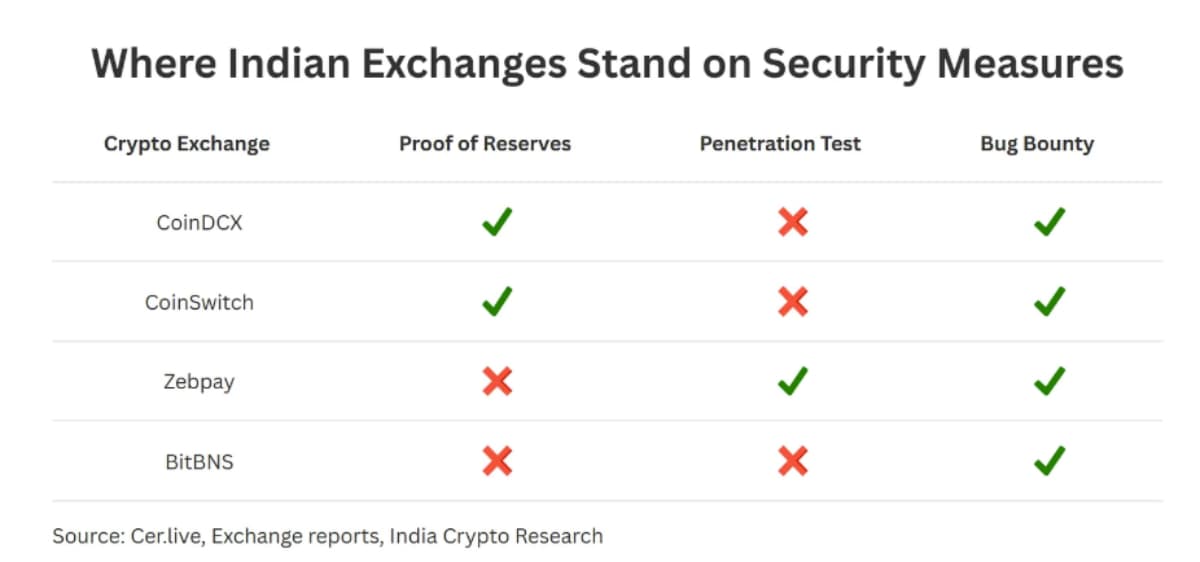
Exchange Safety and Custody
FAQs


India’s crypto market is stabilising with rising adoption across cities, growing participation from young investors, and key legal and stablecoin developments. Investors have remained active, continuing to trade as volumes recover and participation expands across a broader range of assets.
India’s crypto market growth is clearly visible in trading data, with volumes dipping from $269 billion in 2022-23 to $150 billion in 2023-24 before recovering to $300 billion in 2024-25.
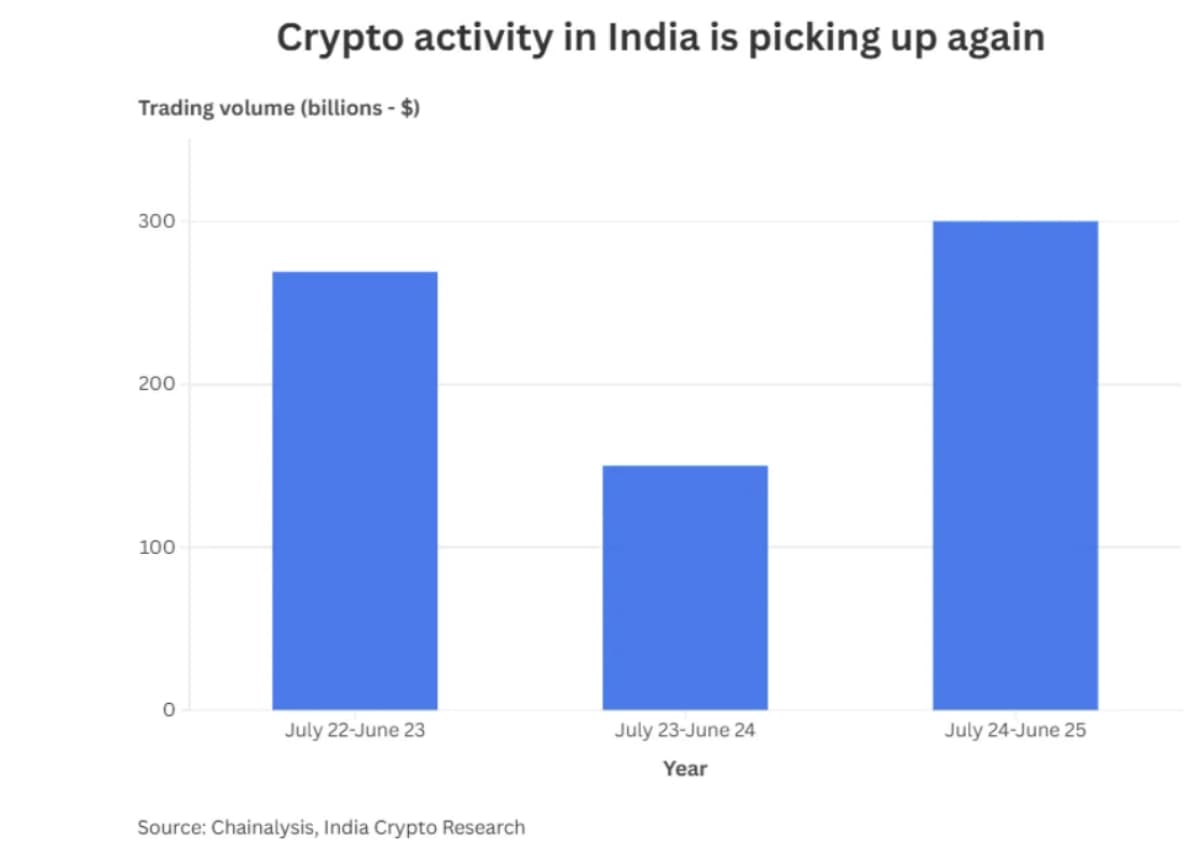
Crypto in India isn’t fading away. Instead, the market is stabilising as investors remain engaged and users continue to participate. This rise in activity is mainly due to price shifts, better platforms, and users who have moved past the learning curve and now understand crypto fundamentals.

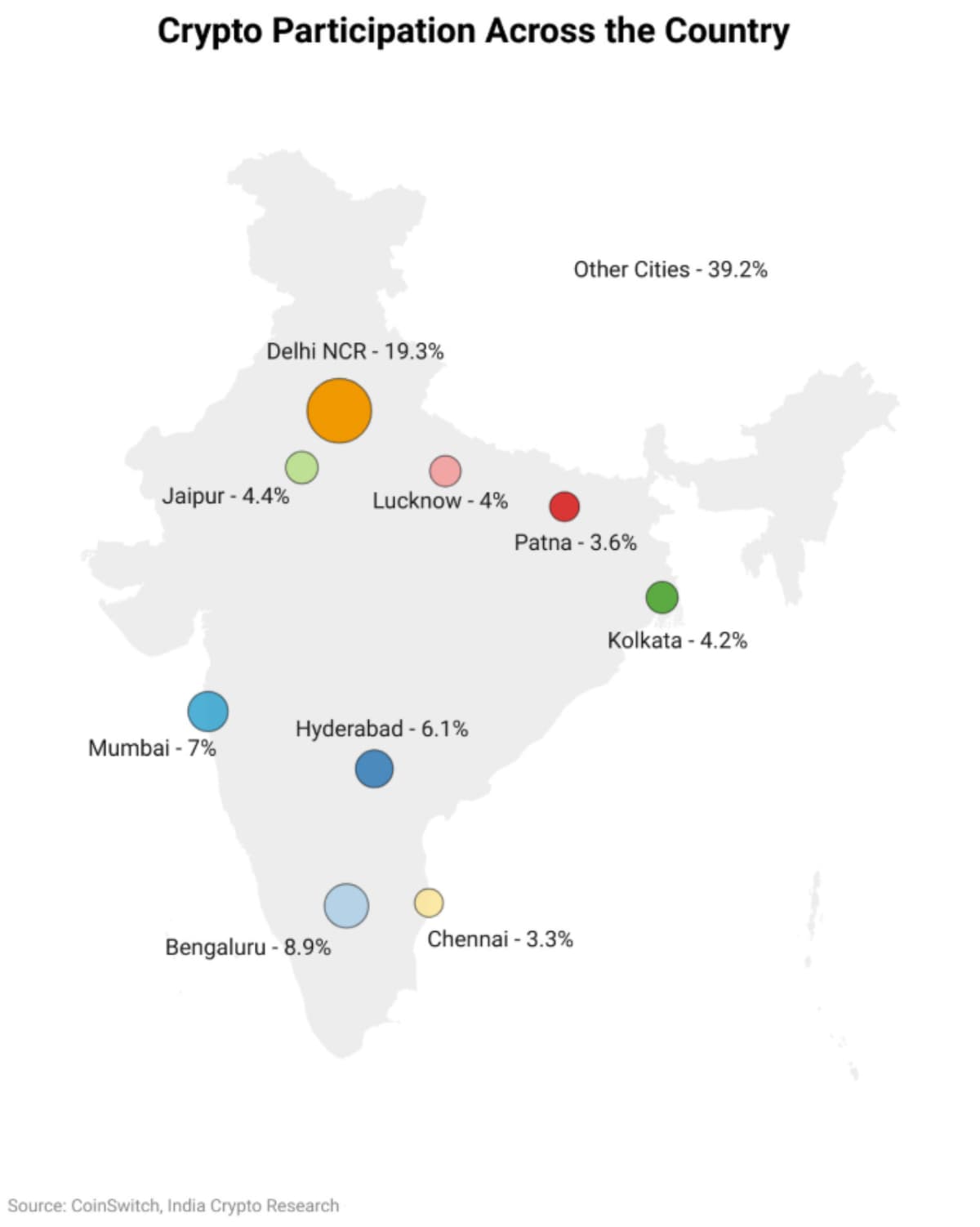
Most crypto activity in India is concentrated in metro cities. Delhi NCR accounts for around 1.93 million crypto users, representing roughly 19.3% of the total user base. Along with Bengaluru, Mumbai, and Hyderabad, the top 10 cities together account for 60% of total crypto activity.
At the same time, the adoption is expanding in Tier-2 and Tier-3 cities. Even smaller towns are starting to engage with crypto, which makes the market more diverse geographically. This shows that India’s crypto ecosystem now has users outside of the metro cities.
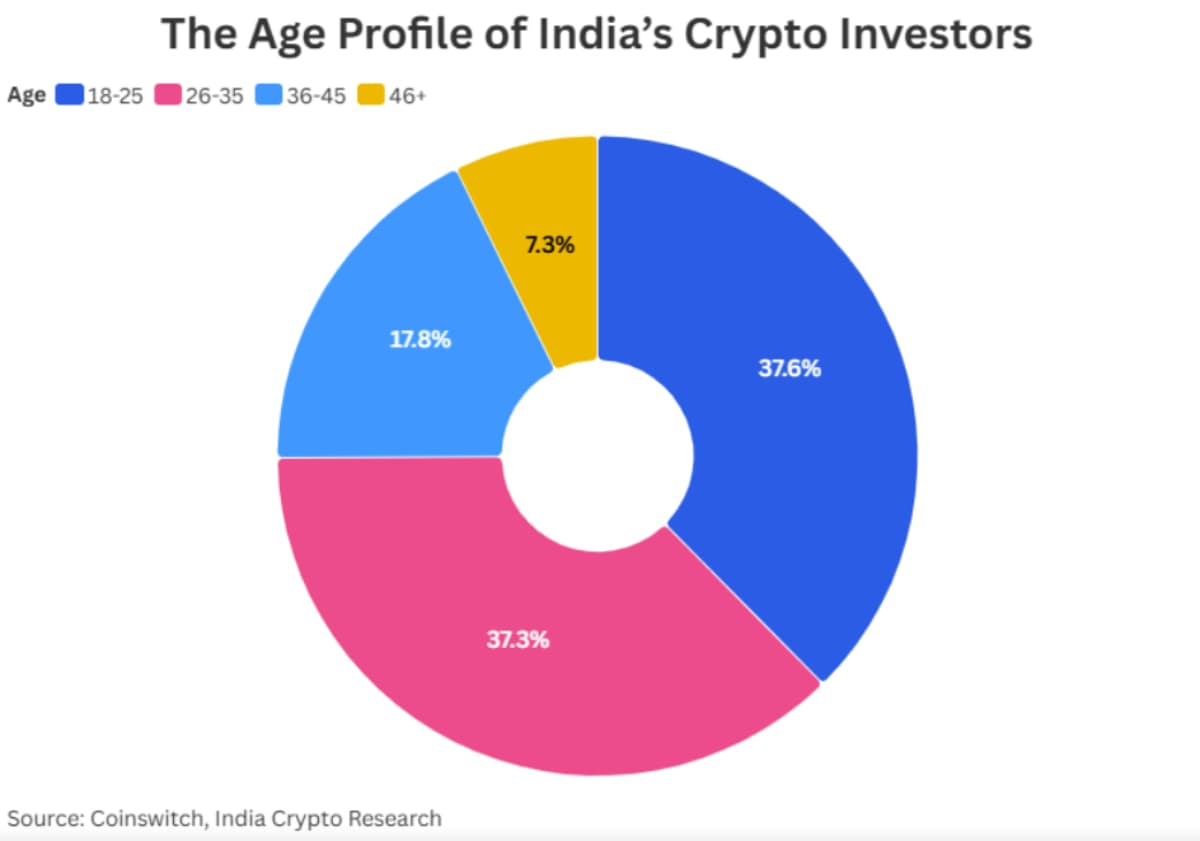
Most users are young, with Gen Z (18-25) and Millennials (26-35) being 75% of the active users. 36-45 makes 18%, and over 45 makes 7%.
Now the average crypto investor in India holds around 5 tokens, indicating diversification. The female crypto investor percentage has gone up to 13-15%, which shows more accessibility and interest.

Data from trading platforms suggests that investors are prioritising established cryptos over short-term speculative projects. Across exchanges, capital is increasingly being allocated to coins with significant market presence and proven scale. This trend shows that Indian investors are focusing on long-term value rather than chasing hype.
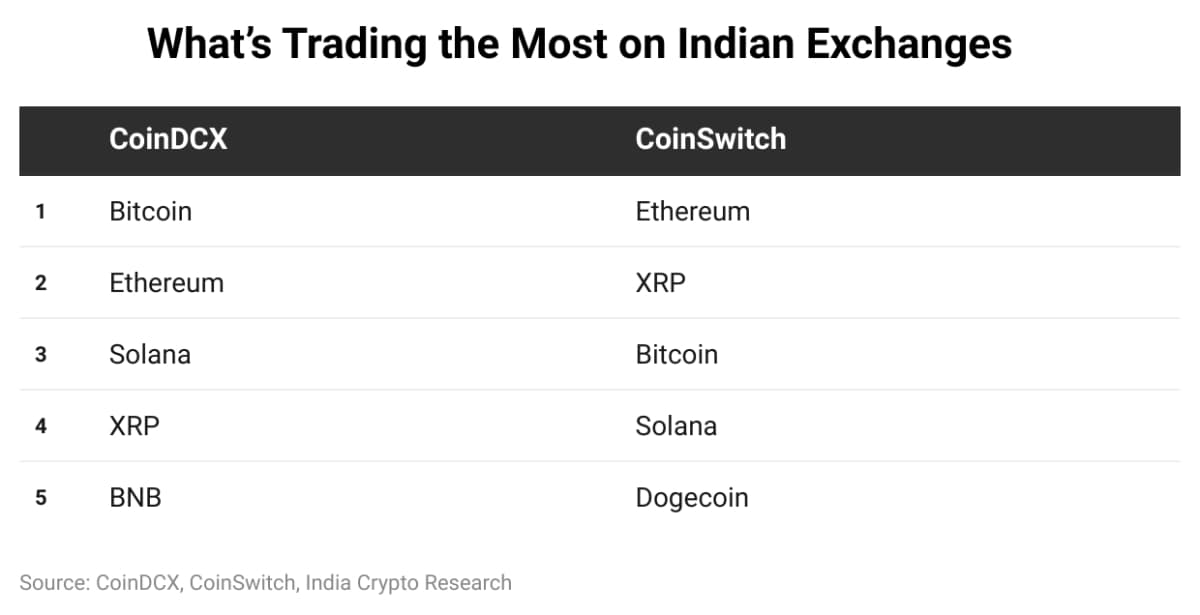
Established Layer‑1 coins and Bitcoin dominate investor portfolios over short-term speculative tokens
Polygon and Anq are developing ARC, a stablecoin pegged to the rupee and backed by Indian government securities. Most stablecoins today are dollar-backed, which primarily strengthens the US dollar. ARC aims to retain liquidity onshore and support domestic demand for government bonds, potentially strengthening India’s financial ecosystem.
The Madras High Court ruled that cryptos are property, meaning they can be legally owned and protected. This decision reinforces investor rights in disputes, even though crypto is not legal tender. The judgment aligns with existing Indian law, which recognises virtual digital assets as a distinct category under Section 2(47A) of the Income Tax Act.
Security is a key concern in crypto. Investors should prioritise platforms that demonstrate strong practices:
Exchanges following these practices are safer, but the most secure option for long-term holdings is self-custody, where users control their private keys.
India Crypto Research operates independently. The information presented herein is intended solely for educational and informational purposes and should not be construed as financial advice. Before making any financial decisions, it's essential to undertake your own thorough research and analysis. If you're uncertain about any financial matters, we strongly recommend seeking guidance from an impartial financial advisor.