
1. What Is a Crypto ATM and How Does It Work?
2. How Many Crypto ATMs Are There in 2026?
3. Volume and Market Size
4. Who Runs the Machines: Operators, Makers and Cash Partners
5. Why Did the Number of Crypto ATMs Fall?
6. Fees and Scams
7. Rules Around the World
8. Why Crypto ATMs Matter
9. Is a Crypto ATM Business Feasible?
10. What About India?
11. Crypto ATMs: Where Do We Go from Here?

Shrinking network: Around 27,300 crypto ATMs are in operation worldwide in October 2026, down roughly 30% from over 39,000 at the start of the year.
North American domination: The US accounts for approximately 71% of all machines, and Canada for about 14%. Europe has only around 1,500.
Small amounts of money, high fees: Estimates put annual volume through crypto ATMs at $2–2.5 billion. Users pay fees of 5–20% per trade, against under 1% on an online exchange.
 Part of a series
Crypto ATMs allow users to purchase cryptocurrency using cash, and in some cases sell cryptocurrency for cash, without a bank account. The first of its kind opened in a coffee shop in Vancouver in October 2013, and by 2025, the network had grown to almost 40,000 machines. 2026 was the industry's fastest year of decline, as governments focused on fraud and operators ran out of money.
Crypto ATMs are connected to an operator's own crypto wallets, not to banks. One-way machines only sell cryptocurrency in exchange for cash. Two-way machines also buy cryptocurrency back and pay out notes.
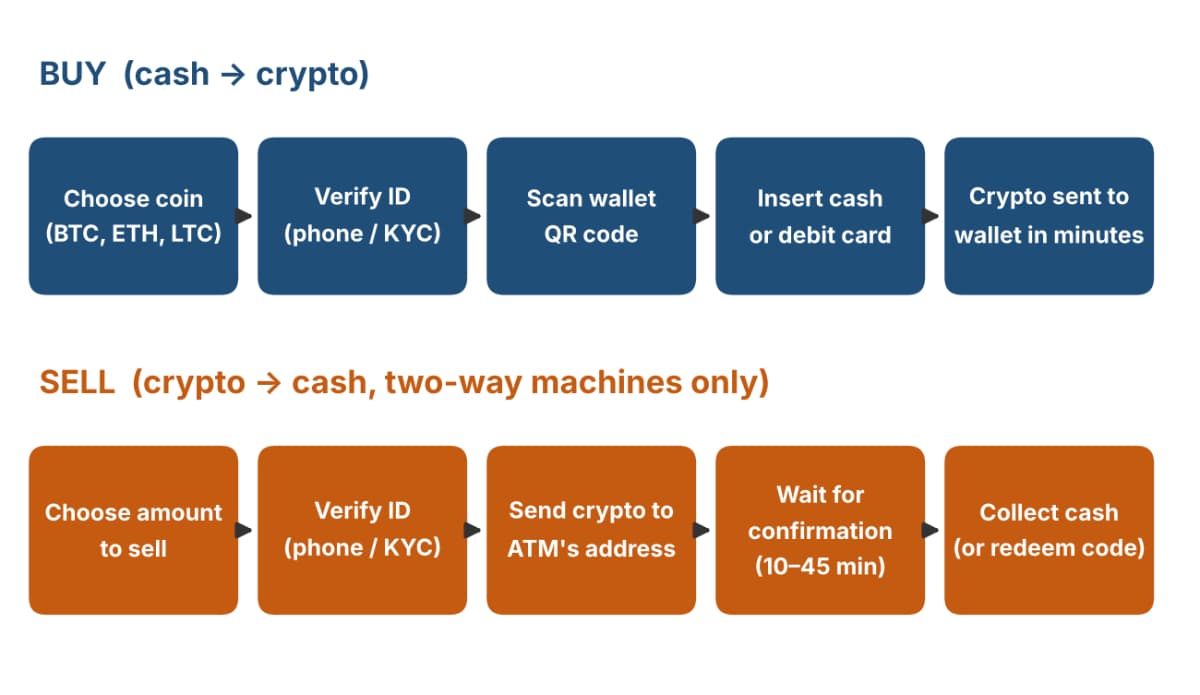
Figure 1: How buying and selling works at a crypto ATM
Most machines sell Bitcoin, which accounts for about 52% of the market, followed by Litecoin and Ethereum. Most machines (about 81%) are one-way, so cashing out is much harder than buying in.
The number of crypto ATMs increased steadily for a decade, with 9 machines in 2013, around 500 in 2015, and 35,100 at the end of 2021, reaching a peak of around 39,000–39,400 in early 2026. The count then plummeted (see Section 5).
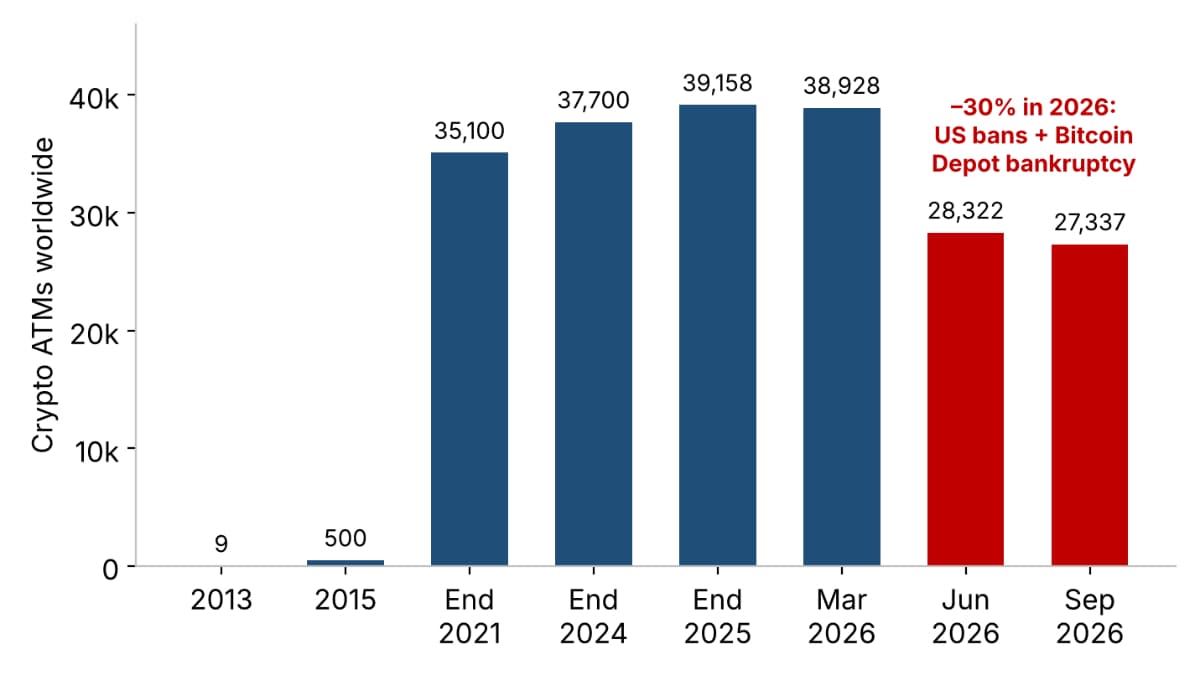
Figure 2: Global crypto ATM count, 2013 to September 2026
During January to September 2026, more than 11,000 machines were removed in the US, so its share of the world's machines fell from 78% in March to 71% in September.
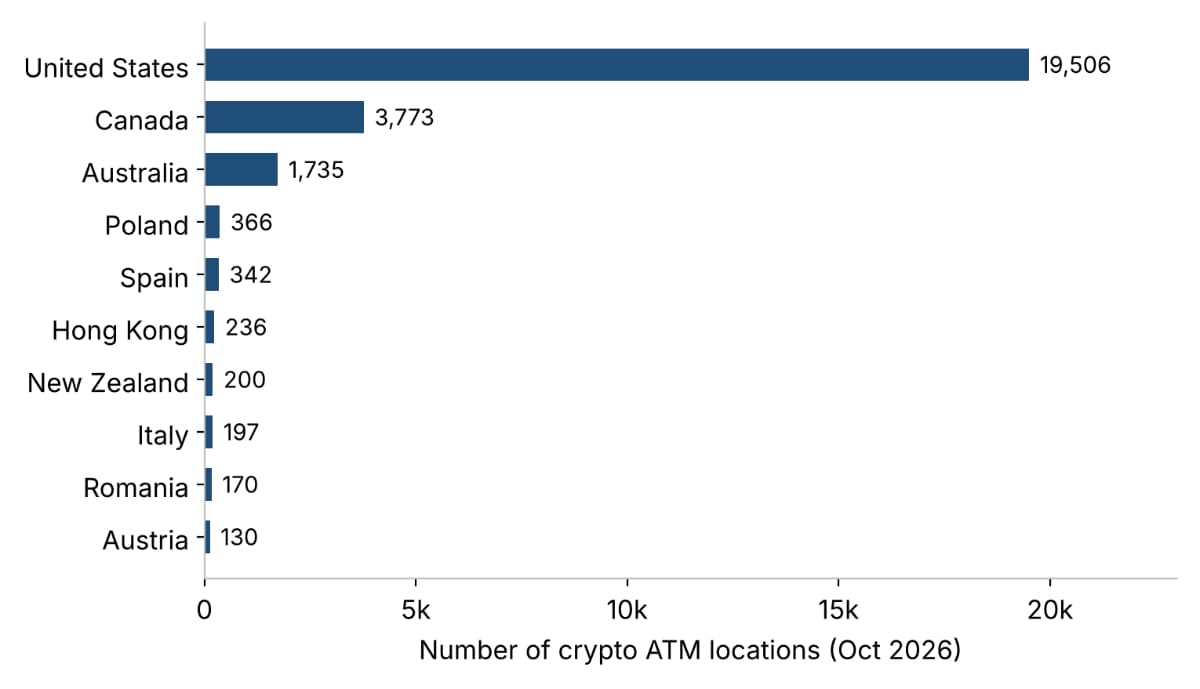
Figure 3: Top 10 countries by crypto ATM locations, October 2026
Estimates place kiosk transaction volume at $2–2.5 billion a year. To put that into perspective, that's less than one day's trading on a large exchange. The best hard number comes from Bitcoin Depot, which posted $615 million in revenue for 2025 from about 9,000 machines, an average of about $68,000 a year per machine.
Table 1: Crypto ATM market at a glance
| Measure | Figure |
|---|---|
| Machines worldwide (Oct 2026) | 27,300 (peak 39,400, Jan 2026) |
| Estimated yearly transaction volume | $2–2.5 billion (estimate) |
| Hardware and software market, 2026 | $550 million (forecast) |
| North America's share of market value | 89% |
| Typical user fee | 5–20% per transaction |
| Largest venue type | Restaurants, shops and petrol stations (36%) |
Fortune Business Insights projects the equipment market will grow from $357 million in 2025 to $18.1 billion by 2034, at a rate of 54.8% annually. The 2026 US collapse makes that projection seem very optimistic.
There are three main parts of the business. Operators own the machines and set the fees. Manufacturers and software firms build them: Genesis Coin (US, owned by Bitstop since 2023), General Bytes (Czech Republic), Lamassu and Bitaccess supply most of the world's fleet. Hosts provide the locations, and cash partners move the notes.
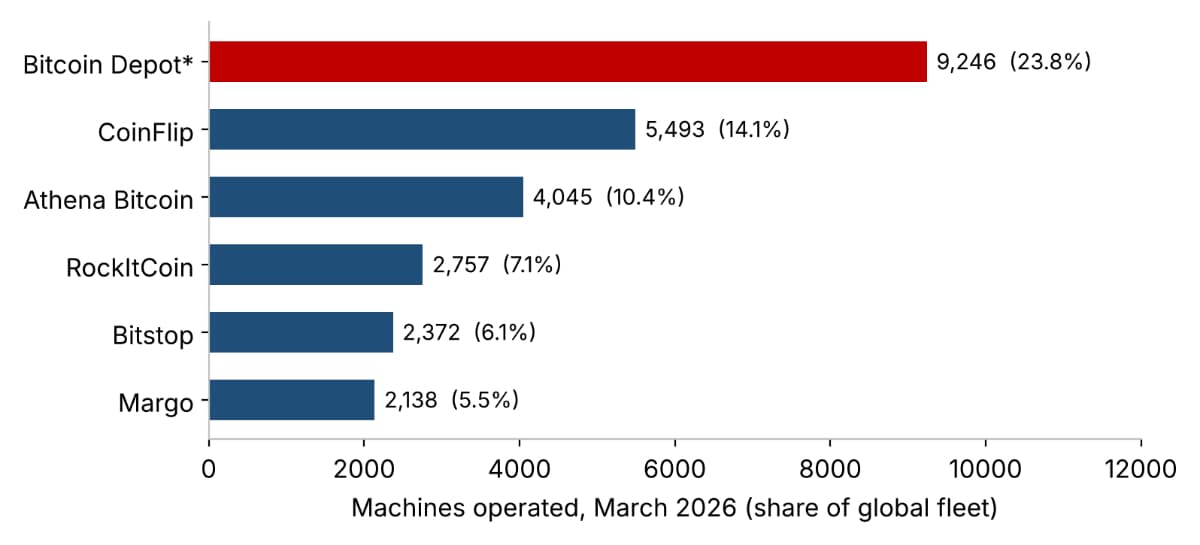
Figure 4: Largest operators by machines, March 2026 (*Bitcoin Depot shut its network in May 2026)
Table 2: Withdrawal and cash partners
| Partner type | Examples | Role |
|---|---|---|
| Retail hosts | Convenience stores, petrol stations, Kwik Trip, grocery stores | Floor space, in exchange for rent or a fee share |
| Cash-out networks | Coinme with MoneyGram agents; Coinstar kiosks | Sell crypto and collect cash at a counter |
| Two-way kiosks | General Bytes, Lamassu machines | Pay out notes directly |
| Cash logistics | Armoured cash-in-transit firms | Fill and empty machines |
The number of machines worldwide dropped from about 39,400 in January 2026 to about 27,300 in October, a drop of about 12,000 or 30%. It was the first large-scale drop in the industry's history, and over 11,000 of those machines were in the US. Canada and Europe lost fewer than 100 machines each. Five connected reasons caused the drop.
The biggest operator shut down. Bitcoin Depot, the largest operator in North America with over 9,000 machines, about a quarter of the world's fleet, filed for Chapter 11 bankruptcy on 18 May 2026. Chapter 11 bankruptcy usually allows a company to keep operating under court protection while it sorts out its debts. Bitcoin Depot used it instead to close down in an orderly way and sell its assets. It switched its whole network off, which is why June 2026 saw a record drop of about 10,000 machines in a single month.
US states banned the machines. Crypto ATM bans began in March 2026, when Indiana sidelined about 800 machines. Tennessee and Vermont banned public crypto kiosks from 1 July, with Minnesota following from 1 August, and all public kiosks are to be removed by 31 December 2026. Cities such as Spokane and St. Paul added local restrictions, and ban legislation is pending in New Jersey and Delaware.
Tighter rules cut what each machine earns. States that kept crypto ATMs, like Arizona, California, and Georgia, added daily transaction limits and stricter ID verification and fraud warnings. Lower limits mean less money through each machine, while compliance and legal costs rise. Bitcoin Depot's revenue fell 49% in the first quarter of 2026, its Connecticut licence was suspended, and it lost $3.7 million in April to a hack of its wallet.
The margins were thin. Even in a good year, there was little room for rising costs. In 2025, Bitcoin Depot had revenue of $615 million and ended up with a net profit of only $5 million after paying for rent, armoured cash collection, compliance staff and lawsuits.
Fraud was the main driving force. In 2025 scam losses in the US rose to $389 million, mostly from older people. This turned lawmakers against the machines. Bans and limits meant operators lost revenue, and thin margins could not absorb the loss. As a result, the US share of the world's machines dropped from 78% in March 2026 to 71% in September, while markets with clear national rules, like Canada, Australia and Europe, stayed broadly steady.
Fees at kiosks are often 5–20%, on top of an exchange rate that can be several per cent worse than the market rate. Critics compare the costs to payday lending.
More concerning than fees is the rampant fraud. Scammers often pose as a bank, the police or a partner and direct victims to feed cash into a kiosk, and the transfer cannot be reversed.
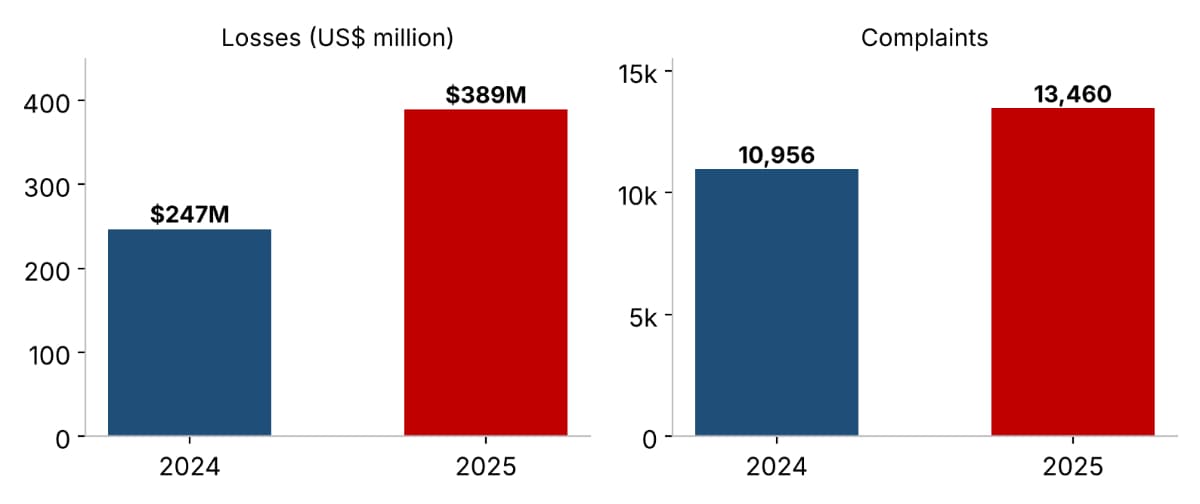
Figure 5: US crypto ATM scam losses and complaints reported to the FBI, 2024–2025
In 2025 the FBI logged 13,460 complaints and $389 million in losses, up 58% in a year. People over 50 lost more than $302 million of that.
Table 3: Crypto ATM rules by country, 2026
| Country | Machines | Rules | Trend |
|---|---|---|---|
| United States | 19,500 | FinCEN licence; 4 states ban, others cap | Falling fast |
| Canada | 3,770 | FINTRAC licence; national ban proposed May 2026 | At risk |
| Australia | 1,735 | AUSTRAC: A$5,000 cash limit, scam warnings | Stable |
| New Zealand | 200 | Ban dropped July 2026; cash caps planned | Stable |
| Europe (Spain, Poland, Italy) | 1,500 | MiCA licence required | Slow growth |
| United Kingdom | 0 | All machines illegal since 2022 | Banned |
| Singapore | 0 | Operators told to shut down in 2022 | Banned |
| India | 0 | No ATM framework; 30% tax on crypto gains | None |
Why countries banned or restricted them
Crypto ATMs are not banned across the entire US: four states have banned them, and the rest allow them, many with limits. Four main reasons explain governments' actions: scams targeting older people, money laundering, unlicensed operators and consumer protection.
Table 4: Reasons behind crypto ATM bans and restrictions
| Reason | What happens | Where it drove action |
|---|---|---|
| Scams on older people | Victims are told to withdraw cash and feed it into a kiosk; crypto transfers cannot be reversed | US states, Canada, Australia |
| Money laundering | Cash turns into hard-to-trace coins, often with light ID checks | Canada, New Zealand, UK |
| Unlicensed operators | No operator registered with the regulator | UK (all machines illegal since 2022) |
| Consumer protection | 5–20% fees and public pressure to speculate | Singapore (shut in 2022), US critics |
Regulators now see crypto ATMs as a fraud and laundering channel first and a payment tool second. Countries that allow them to remain, like Australia and New Zealand, are adding cash caps, ID checks and warnings instead.
The machines still fill a real gap, letting people who rely on cash, or lack a bank account, buy crypto in minutes. They need no app or credit history. In countries with weak currencies, such as Argentina and Nigeria, they offer a quick route into Bitcoin or stablecoins.
A machine costing a few thousand to more than ten thousand dollars that earns a double-digit fee on every trade certainly looks enticing on paper. However, in 2025 Bitcoin Depot generated a gross profit of $106 million and netted only $5 million after expenses like rent, cash handling, compliance and legal claims.
Feasibility now depends on whether rules remain stable, whether each machine attracts enough volume to cover fixed costs, and whether operators can block scams without driving away genuine users.
Cost comparison: Owning a machine versus free placement
Merchant-owned route: A shop owner who buys the machine pays all costs upfront. Hardware costs are in the range of $2,000 to $4,000. Shipping and installation add $300 to $600. The shop owner has to keep $2,000 to $5,000 or more of cash in the machine as float. Monthly costs for maintenance and internet add $30 to $70. Therefore, the total upfront outlay is in the range of $4,300 to $9,600 or more. Owners in this case keep 100% of the surcharge, which is about $2.50 to $4.00 per transaction. This model suits shops with high footfall and the capital to bear the upfront costs and the risk.
Free placement route: A provider owns, installs, fills and maintains the machine, so the shop pays nothing upfront and nothing each month. The trade-off is income: the shop earns only a flat rent or a small share of about $0.25–$0.50 per transaction. This route works for shops looking for extra income and foot traffic without the need to spend money or handle cash. Most crypto ATMs in the US are placed this way, in convenience stores, petrol stations, and the like, by large operators such as CoinFlip, and Bitcoin Depot before its shutdown.
India's first crypto ATM, opened by Unocoin in Bengaluru in October 2018, was seized by the police within a week and its co-founder was arrested. This happened during the RBI's 2018 banking curbs on crypto, which were struck down in 2020.
In India, it is legal to hold and trade cryptocurrencies. However, there is no licensing route for kiosks. Currently, gains on crypto are taxed at a flat 30% plus 4% cess, and 1% TDS is levied on transfers. Cryptocurrency exchanges are required to register with the Financial Intelligence Unit of India (FIU-IND). Cash receipts of ₹2 lakh or more are also barred. As a result, it is very hard to run a cash-based crypto ATM legally, and there are no crypto ATMs operating in India today.
In the US, the market is resetting with fewer machines, lower limits and stricter ID checks. Growth is more likely in Australia, in Europe under MiCA, and in Latin America, where BitBase is expanding in Argentina.
Track Canada's proposed ban, bills in Delaware and New Jersey, and whether cash-to-crypto moves from kiosks to shop counters and apps. The crypto ATM is not going anywhere, but its years of rapid, lightly regulated growth are done.
Sources: TokenPost (18 Oct 2026) and Bitcoin.com News (8 Jul 2026); Fortune Business Insights, Crypto ATM Market report; CoinCentral, Crypto ATM Market Statistics 2026.
India Crypto Research operates independently. The information presented herein is intended solely for educational and informational purposes and should not be construed as financial advice. Before making any financial decisions, it's essential to undertake your own thorough research and analysis. If you're uncertain about any financial matters, we strongly recommend seeking guidance from an impartial financial advisor.


